For generations, the “snow day” has been a beloved institution of childhood—a sudden reprieve from algebra and history, granted by the whims of winter weather. But as global temperature baseline averages steadily creep upward, meteorologists, educators, and parents are analyzing the impact of climate change snow days and beginning to ask a fundamental question: are snow days becoming less common? Is the traditional winter wonderland fading into history? The intersection of climate and school closing policies is vastly more complex than a simple “it’s getting warmer.” At the snow day calculator, our data engineers track massive shifts in atmospheric pressure systems, revealing a volatile future where global warming school closings are driven less by fluffy white snow and more by catastrophic atmospheric instability.
The Core Paradox: Global Warming School Closings and Freezing Outbreaks
The most confusing aspect of climate change for many parents is witnessing a devastating, record-breaking deep freeze while simultaneously reading headlines about the hottest global temperatures on record. How does a warming planet produce sudden, catastrophic winter storms in places practically foreign to snow?
The Destabilization of the Polar Vortex
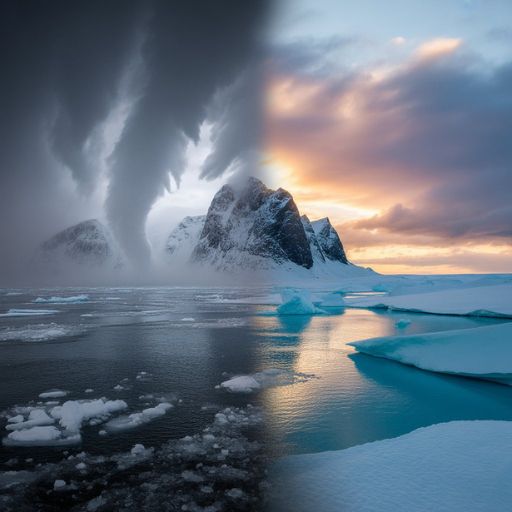
To understand modern school cancellations and the rise of unpredictable climate change snow days, you must understand the stratospheric polar vortex. The polar vortex is a massive expanse of swirling, frigid air that violently circles the North Pole. Think of it as a spinning top contained tightly by a strong jet stream boundary. For decades, a robust temperature difference between the Arctic and the mid-latitudes kept this jet stream boundary incredibly tight and fast, locking the freezing air securely near the pole.
However, the Arctic is currently warming at nearly four times the rate of the rest of the planet. As the temperature gap between the Arctic and the equator shrinks, the jet stream weakens and begins to wobble. Instead of a tight circle, the jet stream dips into massive, plunging waves. These deep waves act as giant funnels, allowing plunging Arctic air to spill far southward into regions entirely unprepared for sub-zero temperatures.
This is precisely why we are witnessing catastrophic freezes in places like Texas or the deep American South. A weakened polar vortex causes sudden, extreme cold snaps. For these southern school districts that lack multi-million dollar snow removal fleets and heated bus barns, a mild frost paralyzes infrastructure instantly. Even if it doesn’t snow, the sheer danger of these sudden cold snaps requires utilizing a dedicated cold day calculator, as wind chills drop to lethal levels for students walking to bus stops.
The “Rain vs. Snow” Threshold: Why Warmer is Actually Worse
As winter baseline temperatures hover dangerously close to the 32°F (0°C) freezing mark, the meteorological nature of winter storms undergoes a terrifying shift for school superintendents monitoring climate change snow days.
The End of Predictable Powder
If a storm rolls through when ambient temperatures are a crisp 20°F, precipitation falls as dry, predictable snow. A school district can analyze radar, dispatch city plow fleets at 2:00 AM, and clear the bus routes effectively before dawn. Six inches of dry snow is a manageable, solvable logistical problem.
The Nightmare of Freezing Rain
However, what happens when global warming nudges that winter storm from 20°F up to 33°F? The precipitation no longer falls as snow; it falls as rain. But if the ground temperature remains frozen (or if the air temperature drops a singular degree mid-storm), that rain instantly flash-freezes upon contact with asphalt, power lines, and tree branches.
A mere 1-degree temperature shift turns a manageable six-inch snowstorm into a catastrophic freezing rain and ice glaze event. Ice is the absolute nemesis of the modern school bus. A heavy diesel bus cannot safely transport children on glazed hills. Furthermore, radial ice accretion weighing down power lines frequently causes massive, localized power grid failures, leaving thousands of students in unheated homes. As our winters grow slightly warmer, our school districts will face fewer simple “snow days” and drastically more high-risk, paralyzing “ice days.”
The Lake Effect Chaos
For school districts situated downwind of the Great Lakes (like Buffalo, Cleveland, and Grand Rapids), climate change is accelerating winter chaos. Lake effect snow is generated when frigid Arctic air sweeps across vast expanses of relatively warm, open water. The cold air absorbs massive amounts of heat and moisture from the lake, dumping it onto the shoreline as incredibly intense, localized snow bands.
Historically, the Great Lakes would freeze over by mid-to-late winter, effectively placing a “lid” on the moisture source and shutting down the lake effect machine. But as global temperatures rise, ice coverage on the Great Lakes is plummeting to historic lows. Because the lakes remain open water much longer into the winter (and sometimes never freeze entirely), the mechanism for generating massive, localized, paralyzing snow bands remains active well into February and March, prompting unexpected, highly concentrated school closures.
The Future Outlook: Polar Vortex School Cancellation and E-Learning
Will students in 2050 ever check a polar vortex school cancellation map with the same excitement as students did in 1995? The prognosis is a fascinating blend of meteorology and educational technology.
As winters trend undeniably warmer overall, the sheer volume of traditional snow days across the mid-latitudes will absolutely decrease. We will likely see shorter winter seasons, less total accumulation in transitional zones (like the Mid-Atlantic), and far more precipitation falling as cold rain. Simultaneously, the integration of forced remote e-learning protocols during the pandemic fundamentally altered administrative behavior. Superintendents realize that even when the polar vortex wobbles and delivers an unexpected ice storm, they no longer need to cancel instruction entirely. They can simply lock the physical buildings and mandate digital learning.
The traditional, magical “Snow Day”—characterized by widespread accumulation, a complete cessation of all academic responsibilities, and neighborhood sledding—is highly endangered. It is being squeezed out of existence by two massive, modern phenomenons: the gradual warming of our winter atmosphere turning snow into freezing rain, and the digital infrastructure replacing physical classrooms.
Final Thoughts
The relationship between childhood and the weather is changing. As the jet stream wobbles and massive blasts of Arctic air collide with increasingly warmer winter baselines, the decision to close a school becomes more complicated than ever before. We must adapt to a future of extreme volatility—a future where the classic snow day is replaced by unpredictable, severe weather deviations. Stay informed, respect the changing climate, and always rely on data-driven forecasting rather than checking the sky.
Frequently Asked Questions About Climate Change and School Closings
Are snow days becoming less common?
Overall, yes. As global baseline temperatures rise, many mid-latitude regions are experiencing shorter winter seasons and less total snowfall accumulation. However, when storms do strike, they are often more severe and volatile due to increased atmospheric moisture.
How does the polar vortex affect school closings?
A weakening jet stream caused by Arctic warming allows the polar vortex to destabilize and plunge southward. This brings sudden, extreme Arctic blasts and lethal wind chills deep into regions that lack the infrastructure to handle it, forcing immediate school closures even without snowfall.
Why is warmer winter weather sometimes more dangerous for school buses?
When winter temperatures hover just slightly above or exactly at freezing (32°F), precipitation often falls as rain instead of snow. If ground temperatures are cold, this causes flash-freezing ice glaze. Ice is significantly more dangerous to heavy diesel school buses and city power grid infrastructure than several inches of dry powder snow.
Will climate change end snow days entirely?
It will not end them entirely, but it is drastically changing their nature. We will likely see fewer ‘traditional’ snow days and more closures due to extreme instability—like sudden deep freezes, catastrophic ice storms, and extended late-season lake effect bands caused by un-frozen massive bodies of water.
Ready for tomorrow?
Don't get caught off guard. Check your exact chance of a snow day with our live snow day calculator.